Keynote Speakers
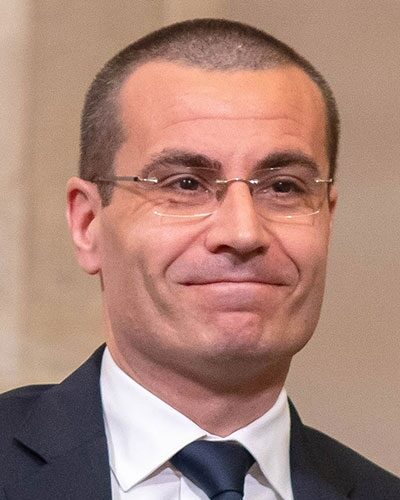
Towards Physical Neural Networks for Wireless Communications
Marco Di Renzo – Prof. of Telecommunications Engineering at King’s College London
Abstract: A physical neural network is a type of artificial neural network in which an electrically adjustable material is used to emulate the function of a neural neuron model. The term “physical” neural network is used to emphasize the reliance on physical hardware utilized to emulate neurons as opposed to software-based approaches. In this talk, we discuss the role of physical neural networks in the context of wave-domain information processing for wireless communications. We will focus our attention on implementations based on reconfigurable metasurfaces, by considering the case of the recently proposed stacked intelligent metasurface technology.
show moreMarco Di Renzo received the Laurea (cum laude) and Ph.D. degrees in electrical engineering from the University of L’Aquila, Italy, in 2003 and 2007, respectively, and the Habilitation à Diriger des Recherches (Doctor of Science) degree from University Paris-Sud (currently Paris-Saclay University), France, in 2013. Currently, he is Chair Professor of Telecommunications Engineering, the Director of the Centre for Telecommunications Research, and the Head of the Telecommunications Group, Department of Engineering, King’s College London, London, United Kingdom. He is also a CNRS Research Director (Professor) with the Laboratory of Signals and Systems at CNRS-CentraleSupélec, Paris-Saclay University, Paris, France. He was a France-Nokia Chair of Excellence in ICT at the University of Oulu (Finland), a Tan Chin Tuan Exchange Fellow in Engineering at Nanyang Technological University (Singapore), a Fulbright Fellow at The City University of New York (USA), a Nokia Foundation Visiting Professor at Aalto University (Finland), and a Royal Academy of Engineering Distinguished Visiting Fellow at Queen’s University Belfast (U.K.). He is a Fellow of the IEEE, IET, EURASIP, and AAIA; an Academician of AIIA; an Ordinary Member of the European Academy of Sciences and Arts, an Ordinary Member of the Academia Europaea, and an Ordinary Member of the Italian Academy of Technology and Engineering; an Ambassador of the European Association on Antennas and Propagation; and a Highly Cited Researcher. He has received several distinctions, including the Michel Monpetit Prize conferred by the French Academy of Sciences, the IEEE Communications Society Heinrich Hertz Award, and the IEEE Communications Society Marconi Prize Paper Award in Wireless Communications. Also, he is a principal investigator of an ERC Synergy grant on metasurface-based information processing. He served as the Editor-in-Chief of IEEE Communications Letters from 2019 to 2023, and as the Director of Journals and Chair of the Publications Misconduct Ad Hoc Committee of the IEEE Communications Society from 2024 to 2025. Currently, he sits on the IEEE-COMSOC Fellow Evaluation Standing Committee and on the Editorial Board of the Proceedings of the IEEE.
https://www.kcl.ac.uk/people/marco-di-renzo
Three Years in the Construction of the SKA-Low Telescope: Lessons Learned, Challenges and Future Perspectives
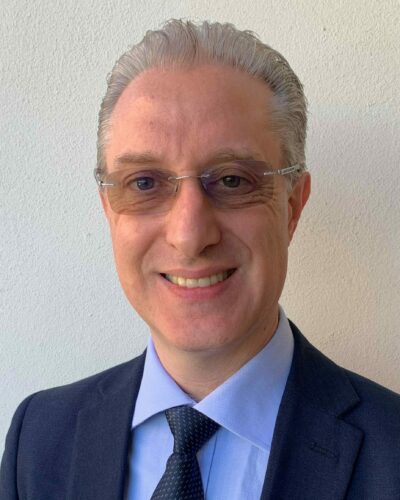
Lucio Tirone – Low AIV Lead Engineer @ SKAO
Abstract: After the first Level 1 Milestone was achieved last July 2025 (Array Assembly 0.5, or AA0.5), the full focus of the deployment of the SKA-Low Telescope is now on the next step, AA1. The scale of the Telescope is being quadrupled, passing from 4 to 16 fully populated Stations (each Station composed of 256 SKALA Antennas), and so does the complexity of the control system needed to operate it. New challenges are arising, from the consolidation of the novel technologies employed in the array, to the establishment of proper operation and maintenance procedures for the equipment already on the ground, to the planning for scaling up towards the future Milestone, AA2 in 2027, which will challenge the engineering and science teams with another staggering quadruplication, targeting 68 Stations. This upgrade will make SKA-Low the actual largest radio-telescope array on the planet, and will be the gateway to start the phase of Science Verification.
show moreLucio Tirone is the Assembly, Integration and Verification Lead Engineer for the Square Kilometre Array Observatory, with responsibility over the integration and verification phases of the low frequency radio telescope SKA-Low.
He graduated in Electronics Engineering at the University of L’Aquila, Italy, and in over 28 years of field expertise he gradually extended his electromagnetic background towards broad spectrum aspects of Systems Engineering in various national and international projects in the Defense, Aerospace and Transport domains. Among the others, he contributed to the conception, design and implementation of systems such as the Algerian VTMIS (Vessel Traffic Management and Information System), the Kuwait Coastal Surveillance System (CSS), the Croatian VTMIS, the Riyadh ITS (Intelligent Transport System), and to the validation of systems such as the SAR Satellite of the Cosmo SkyMed (TEMPEST qualification), the Terrestrial Launcher Module of the SAMP/T (Middle Range Surface to Air Terrestrial System)(lightning strike and high altitude nuclear e.m. impulse IEM/HA qualification), the Command, Engagement, Radar and Launcher Modules of the SAMP/T (TEMPEST qualification).
He has been Head of the Systems Engineering department of Fincantieri, co-founder and Technical Director of the engineering company Aster, Director of the EMEA Sector (Europe, Middle East and Africa) of INCOSE, the International Council on Systems Engineering, and co-founder and President of the Italian Association of Systems Engineering.
Lucio Tirone was the first Italian to achieve INCOSE CSEP Certification (Certified Systems Engineering Professional) in 2012, and ESEP (Expert Systems Engineering Professional) in 2021. He is also OMG-Certified Systems Modeling Professional.
https://www.linkedin.com/in/lucio-tirone/
Optical fibers beyond communication
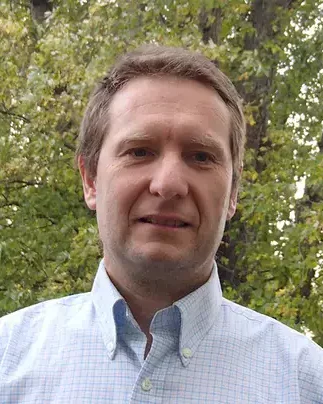
Roland Ryf – Department Head Advanced Photonics Research Nokia Bell Labs
Abstract: Digital signal processing (DSP) combined with coherent optical technology has revolutionized fiber-optic communication, delivering over an order of magnitude more capacity than conventional on-off keying systems. This approach significantly simplifies line system design by compensating for linear and partially nonlinear impairments in the digital domain rather than the physical domain. Additionally, it is a key enabler for novel high-capacity transmission systems based on multi-mode and multi-core fibers.
Recently, similar techniques have been applied to reflective fiber sensing. This has resulted in distributed acoustic sensing (DAS) interrogators with enhanced sensitivity, longer reach, and compatibility with existing communication networks—effectively transforming current optical infrastructure into dense acoustic sensing arrays.
Roland Ryf received the diploma in electrical engineering from the University of Applied Sciences (NTB) Buchs (Switzerland) and the diploma and the Ph.D. in physics from the Swiss Federal Institute of Technology (ETH) Zürich (Switzerland), working on the photorefractive effects and its applications in optical storage and fast optical correlation. After joining Bell Labs in 2000 he worked on MEMS based large port-count optical cross-connect switches, and high-resolution optical wavelength filters. Additionally, he worked on MEMS based infrared cameras with optical readout and laser based microprojectors. Since 2009 he has been working on multimode and multicore components, wavelength selective switches and optical amplifiers, and numerous first experimental demonstration of long-distance high-capacity space-division multiplexed transmission over multimode fibers and coupled-core multicore fibers.
He is a fellow of the IEEE, fellow of the Optical Society of America, a Bell Labs fellow, and recipient of the 2018 IPS William Streifer Scientific Achievement Award. He authored/coauthored over 250 journal and conference publications, and holds over 50 patents.